
Federated learning
Research on distributed training methods for ML models
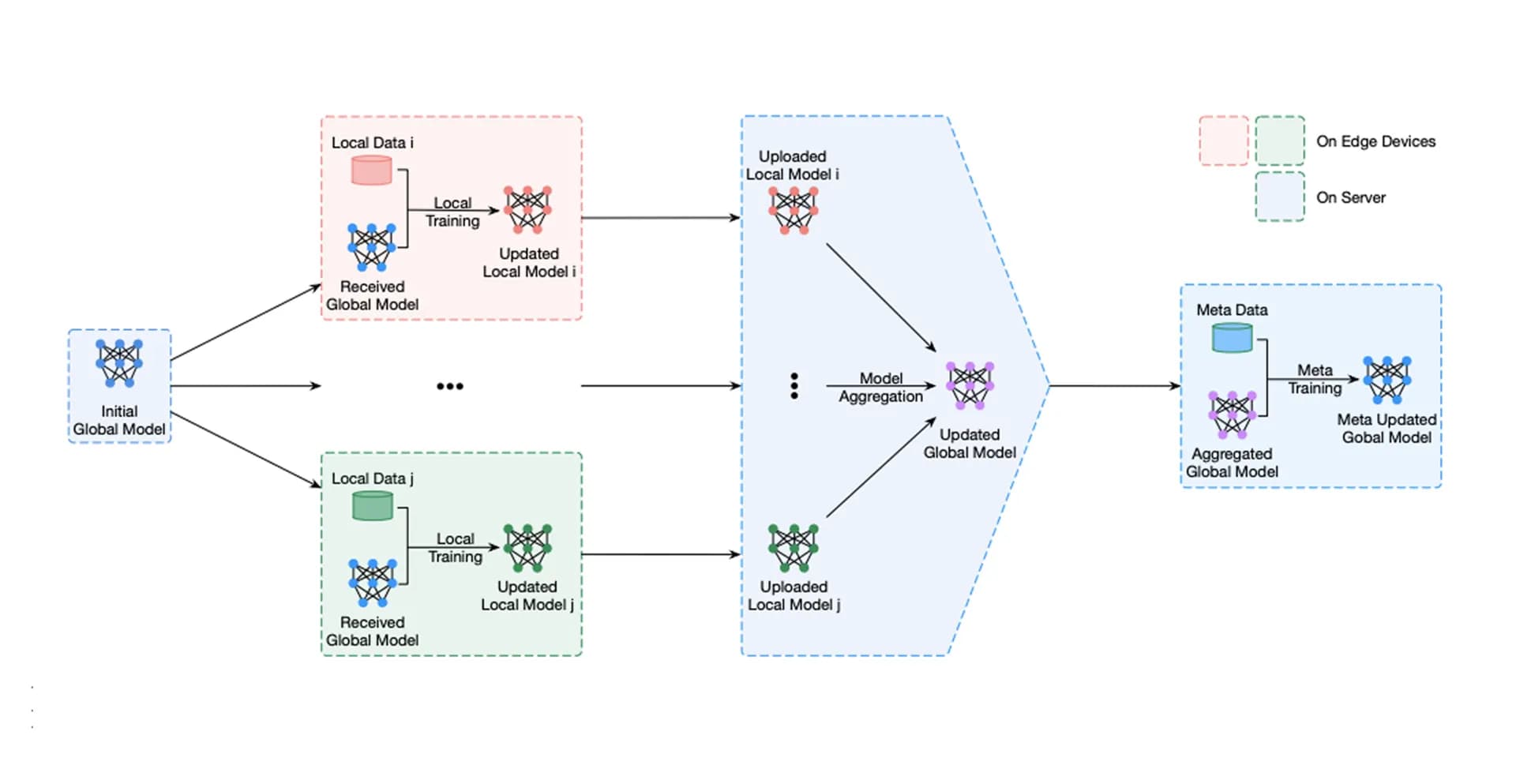
The research grew out of the client’s plan to move its compute from one large server to several smaller ones. It gave the business a clear answer on which AI model architecture suits the project better: centralized or distributed. The results have been applied to training without centralized data storage.
Gradient bias when data is unevenly distributed across clients (non-IID) and unstable convergence when nodes drop out.
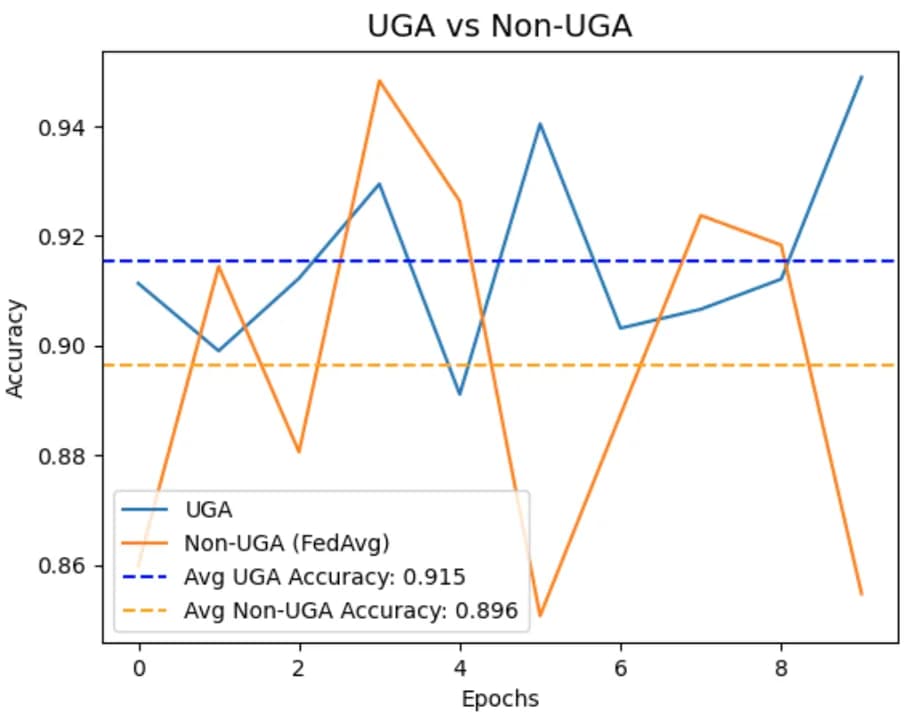
We evaluated federated learning methods and improvements to gradient aggregation algorithms under different data batching schemes. The results were validated by researchers at the Laboratory of Mathematical Methods of Optimization at the Moscow Institute of Physics and Technology (MIPT).
- 0101
Architecture research
Reviewing existing federated learning and distributed ML methods.
- 0202
Algorithm design
Designing gradient aggregation and metadata update schemes.
- 0303
UGA/FedMeta implementation
Integrating unbiased aggregation methods and meta-learning approaches.
- 0404
Distributed training
Setting up interaction between nodes and local models.
- 0505
Model evaluation
Testing the stability and accuracy of distributed training.
- 0606
Results & write-up
Performance analysis and documenting the research findings.
- 01Python
- 02PyTorch
- 03Flower
- 04NumPy
- 05Machine Learning
- 06Decentralized Systems
- 07Docker
- 08gRPC
Have a similar challenge?
We’ll review it and estimate within 5 business days.